

NYU Students Back Hunger Strike as Push Grows to End 24-Hour Shifts

Home care workers participating in the No More 24 Hunger Strike outside City Hall. Photo courtesy of Home Care Workers Against 24.
A hunger strike launched by home care workers protesting 24-hour shifts has now entered its seventh day.
A growing number of New York University students and faculty are publicly supporting the strike as pressure mounts on city officials to pass reform legislation.
“We are deeply concerned that our city … is failing to pass legislation to abolish the exploitative and inhumane 24-hour workday,” reads a petition signed by members of the NYU community.
“Zohran Mamdani and Julie Menin, where are you?” asks Feng Zhen Yan, one of the workers on strike who worked 11 years of 24 hour shifts at Renaissance Home Health Care.
The hunger strike follows a multi-week sit-in demonstration organized by workers within the 24-hour work system, many of whom are immigrant women working in home healthcare. After their demands were rejected and the deadline was missed for New York City Council Speaker Julie Menin to submit the bill, organizers announced a hunger strike.
The strike began on Thursday, taking place daily at noon, just outside City Hall.
“We are fighting so all working people, including the next generation, do not need to suffer from the 24-hour workday. We are fighting to end this inhumane practice,” says Cai Qiong Liu, another worker on strike.
“The 24-hour days have damaged my body, and I have suffered lifelong damages,” adds Yizhen, a striker who worked 24-hour shifts for 12 years. “It is detrimental to my family.”
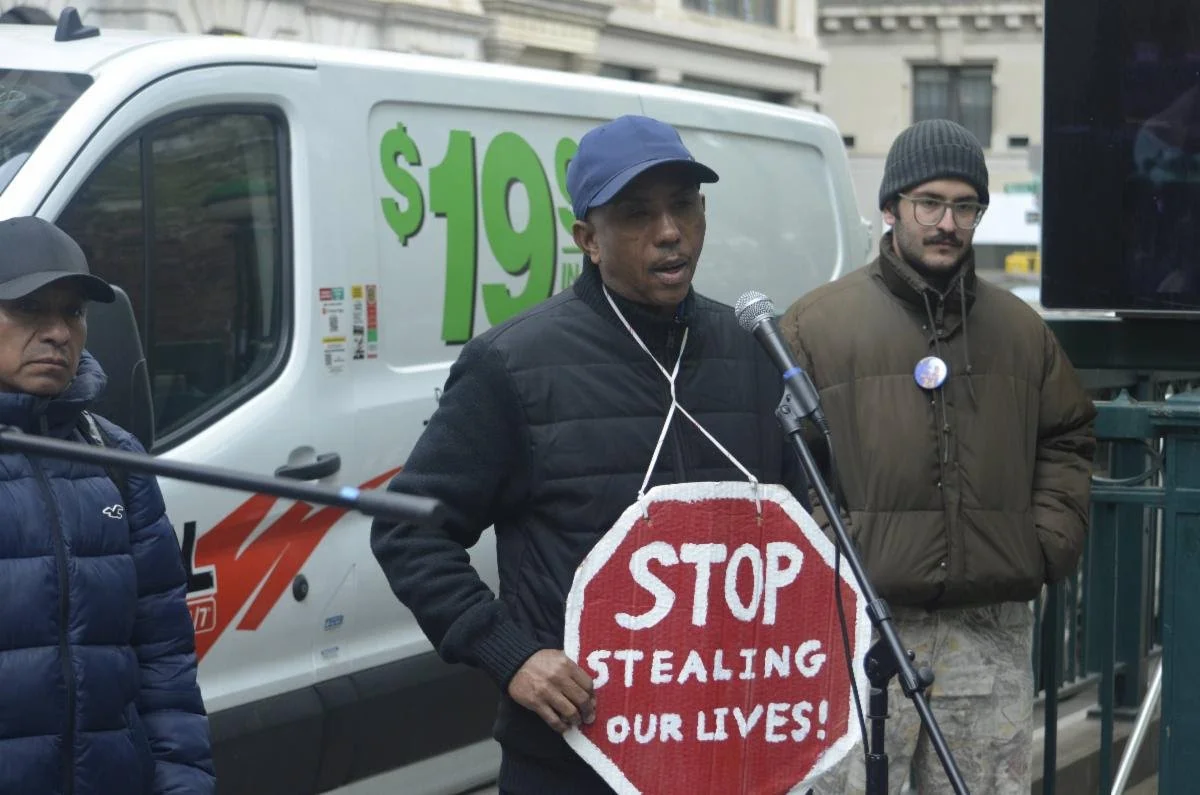
One striker held a sign in protest that read, “stop stealing our lives!” Photo courtesy of Home Care Workers Against 24.
City Council Member Julie Won took to Instagram to further explain the strike and implore people to take action. Won was also one of the speakers on the first day of the strike.
The proposed legislation, Intro. 303 otherwise known as the “No More 24 Act,” intends to eliminate 24-hour shifts for home care workers, which critics say often result in workers being paid for fewer hours than they actually work. It would essentially split the shift into two separate shifts of 12 hours to be fulfilled by two different home care aides.
Home care workers have sought to end state rules for over a decade that allow 24-hour home care workers to be paid for only 13 hours a day. These shifts are allowed as long as workers get three hours for meal breaks and at least five hours of sleep without interruption. Advocates for the bill contend that the current system relies on unrealistic assumptions about uninterrupted sleep during shifts. They also argue that workers routinely work for up to 96 hours straight without rest and are only paid for a fraction of that time.
Opponents of the bill argue that it will conflict with state law, as home care services are governed by Medicaid at the state level. Opposition also centers around fears that eliminating these shifts without massive funding increases will collapse the Medicaid-funded home care system, leaving elderly and disabled patients without care or forcing them into institutions.
The bill was first introduced in the New York City Council on January 29 of this year. While sponsored by Council Member Christopher Marte, home care workers have pressured City Council Speaker Julie Menin to bring the bill to the floor for a vote.
After facing opposition, allegedly including from Governor Kathy Hochul and Mayor Zohran Mamdani, Menin pulled the bill in March before it could be voted upon. Menin promised to push the bill for a vote in April, but prompted the current hunger strike after missing the April 7 filing deadline.

Protestors outside City Hall, supporting the No More 24 Act to end 24-hour shifts. Photo courtesy of Home Care Workers Against 24.
Supporters of the bill say the issue is urgent. “We want changes, and these changes should really start from the abolishment of the 24-hour workday and the protection of the most vulnerable immigrant women workers of our city,” the NYU letter states.
The statement also criticizes New York City Mayor Zohran Mamdani, alleging that he declined to act on the legislation and has contributed to delays.
“Mayor Mamdani sent the police to harass the hunger strikers and threatened to remove cover providing shelter from the wind,” according to a Home Care Workers Against 24 press release.
“The last time I attended a hunger strike here at City Hall was in 2021 when the taxi strikers staged a 15-day hunger strike. Who participated? Zohran,” says NYU Professor Andrew Ross. “Why can he not support and show up for this strike here? Shame!”
The mayor’s office did not immediately respond to the NYU Review’s request for comment.
Organizers of the strike say it is a last resort after months of advocacy. They argue that 24-hour shifts not only harm workers but also jeopardize patient care.
One of the strike’s organizers and a member of Youth Against Sweat Shops, Casey Robinson, tells The NYU Review, “Workers have died trying to get justice and ending these shifts. A system like this can’t continue on the backs of workers’ suffering.”
The NYU letter frames the issue as one regarding labor rights and public health, rejecting arguments that reform is too costly. “The health and lives of these women should not be discussed as a budgetary issue or be treated as bargaining chips.”
Robinson, further rejects the idea of a monetary lack. “The money is there, it’s just being given to the wrong people,” Robinson tells us.
Dozens of individuals signed the letter, along with campus-affiliated groups including Contract Faculty United and Students for International Labor Solidarity.
Other open letters of support have come flooding in for the home care workers on strike. One letter addressed to Mayor Mamdani, Speaker Julie Menin and New York City Council Members from several groups consisting of people with disabilities as well as home care workers, urges them to oppose the bill, arguing that it unnecessarily pits home care workers against disabled people.
This all comes amid larger debates over working conditions in New York City’s home care industry, one of the fastest-growing sectors in the region.
Demonstrators say eliminating 24-hour shifts would be a major step toward improving labor protections and that they will continue their protest until city leaders take action, specifically until City Council Speaker Julie Menin brings the No More 24 Act to a vote.
**UPDATE:
As of April 23, day eight of the strike, the workers announced a pause in order to mobilize for a May 1 protest for International Worker’s Day in front of City Hall, where they plan to further demand Mayor Mamdani support the No More 24 Act.
According to a press release from Home Care Workers Against 24, the workers also celebrated as the version of Intro 303 they’re in favor of has been agreed upon by City Council Speaker Julie Menin’s office. They handed the bill to Mayor Mamdani’s office and were promised that the bill would be submitted to a vote by May 14.
“We got the commitment that they will stand with the language of the bill that these workers support. And so we’re setting a deadline,” says hunger striker representative and Council Member Chris Marte. “And if there is no action on this bill by May 15, I will be with these workers on the ground, and taking whatever action we need to take to make sure that they put this bill to a vote.”
Follow along for more breaking news and updates.